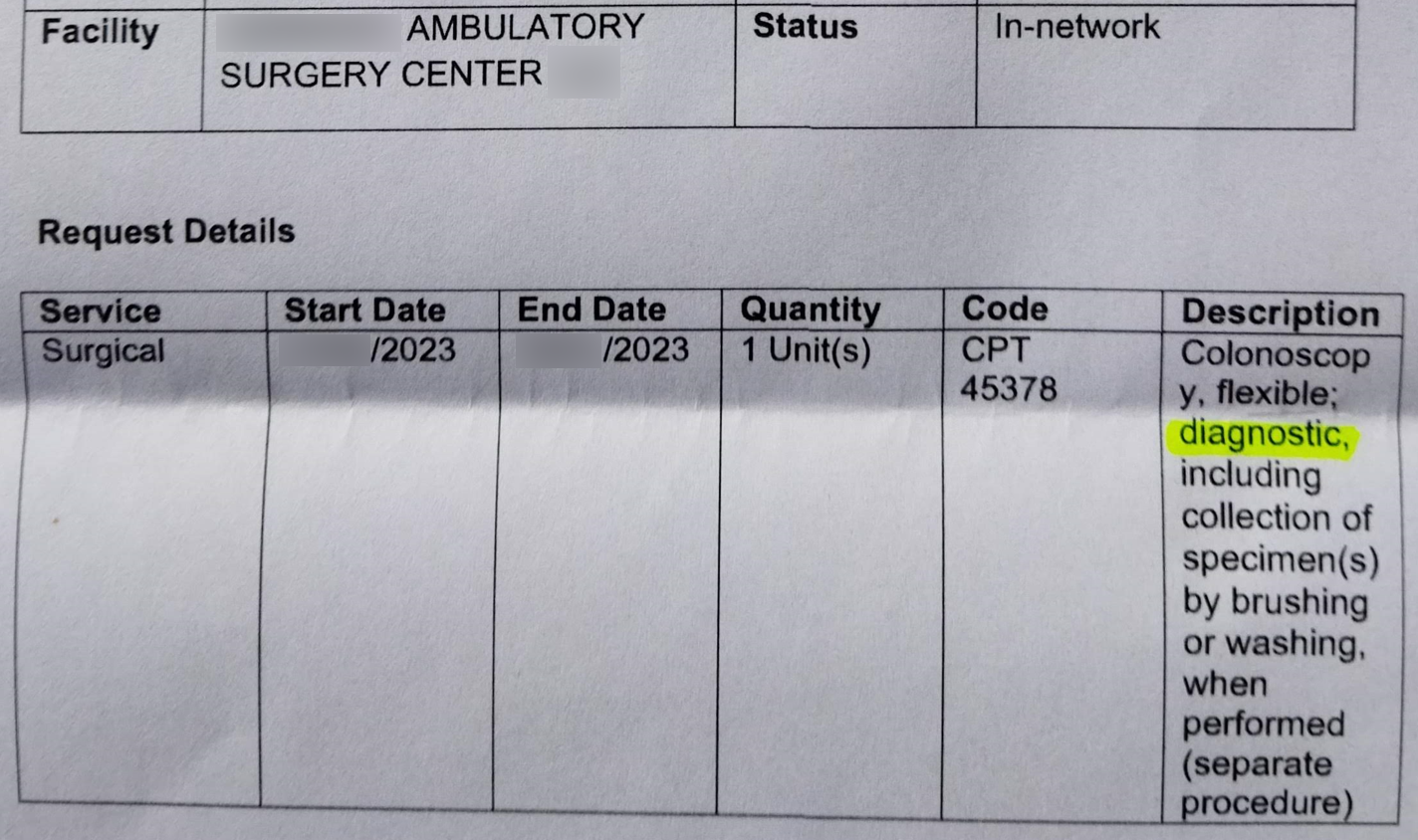
If you scheduled a preventive screening colonoscopy and then received a bill, don’t assume the charge is correct.
Finding and removing a polyp during a screening colonoscopy does not, by itself, allow your health plan to apply a deductible, copay, or coinsurance.
For plans subject to the Affordable Care Act’s preventive-service requirements, a qualifying screening colonoscopy and services integral to it generally must be covered without cost sharing when you meet the applicable network and coverage requirements.
But not every colonoscopy is preventive screening. Understanding why the procedure was ordered—and how the claim was submitted and processed—is the starting point.
Screening versus diagnostic colonoscopy
A screening colonoscopy looks for colorectal cancer or precancerous changes in someone without symptoms prompting the test.
A diagnostic colonoscopy investigates a concern, such as bleeding or other gastrointestinal symptoms. It can be covered by insurance while still being subject to your deductible, copays, or coinsurance.
| Situation | What to know about coverage |
|---|---|
| Routine screening that meets preventive guidelines | Generally covered without cost sharing under applicable plans and network rules |
| Polyp found and removed during a qualifying screening | Polyp removal does not, by itself, eliminate preventive coverage |
| Follow-up after a positive qualifying stool-based screening test | Generally part of completing the preventive screening |
| Procedure ordered to investigate symptoms | May be subject to the plan’s normal cost sharing |
| Surveillance because of previous polyps or another medical history | Check the specific indication and plan benefits; don’t assume it is covered like routine screening |
The classification should reflect the medical circumstances. A billing correction is appropriate when the claim is inaccurate—not simply because preventive coverage would cost less.
When should screening be covered?
The U.S. Preventive Services Task Force recommends colorectal cancer screening for adults ages 45 through 75. Colonoscopy every 10 years is one recommended strategy for average-risk adults; other screening methods have different intervals.
That does not mean everyone should wait 10 years between procedures. Your doctor may recommend earlier or more frequent testing because of your history or other circumstances.
An earlier procedure may be medically necessary without qualifying for the same no-cost preventive benefit. Confirm the coverage rather than postponing recommended care based on a general insurance rule.
What if the doctor removes a polyp?
If the colonoscopy was scheduled and performed as a qualifying preventive screening, removing a polyp is an integral part of that procedure.
Federal guidance specifically addresses this situation. A plan should not impose cost sharing merely because its claims system treats the polyp-removal procedure code as therapeutic.
The provider’s coding and medical documentation should identify the screening circumstances. If that information was submitted correctly, the insurer may need to reprocess the claim rather than have the provider change it.
What about anesthesia, pathology, and bowel preparation?
Services integral to a qualifying preventive colonoscopy generally receive the same no-cost-sharing treatment. Federal guidance identifies:
- A required specialist consultation before the screening.
- Prescribed bowel preparation medication.
- Medically appropriate anesthesia.
- Polyp removal during the screening.
- Pathology examination of a polyp biopsy from the screening.
Coverage can involve prescription selection, pharmacy, and network requirements. Before paying for bowel preparation, ask whether your plan has a covered preparation and what to do if your doctor says you need a different one.
Separate bills don’t automatically mean separate patient responsibility. The facility, physician, anesthesia group, and pathology provider may submit different claims for the same screening.
Positive stool test: does the colonoscopy become diagnostic?
A follow-up colonoscopy after a positive qualifying stool-based colorectal cancer screening test is generally part of completing the screening process.
For people covered by the applicable preventive recommendation, plans subject to the ACA requirement must cover that follow-up without cost sharing. Similar guidance applies after certain other positive screening tests, including screening sigmoidoscopy or CT colonography.
That is different from a colonoscopy ordered to investigate symptoms. The reason for the original test matters.
What to do if you receive an unexpected bill
1. Compare the bill with your explanation of benefits
The explanation of benefits, or EOB, shows how your insurer processed the claim. It isn’t itself a bill.
Check whether the amount reflects a deductible, coinsurance, a denial, an out-of-network determination, or a claim that hasn’t finished processing.
2. Ask the insurer why you owe the amount
Ask which claim and benefit rule produced the charge.
If the procedure was preventive screening, ask why it wasn’t processed under the preventive benefit. Get a call reference number and keep notes.
3. Ask the provider’s billing office to review the claim
Ask whether the procedure and diagnosis codes accurately reflect why the colonoscopy was ordered and performed.
If something was submitted incorrectly, request a corrected claim. If the coding was accurate, ask the insurer to review its processing with the provider’s documentation.
4. Request a billing hold while the issue is reviewed
Ask the billing office whether it can pause collection activity while the provider and insurer investigate. A dispute does not automatically pause payment deadlines.
5. Appeal if necessary
If the insurer maintains the charge, request its written explanation and appeal instructions. Follow the deadline shown in your notice.
Include the EOB, relevant medical documentation, and an explanation of why the preventive benefit should apply. Keep copies of everything you submit.
Check network participation before the procedure
Confirm both the facility and gastroenterologist participate in your specific network.
The No Surprises Act provides protections against certain out-of-network bills at in-network hospitals and ambulatory surgical centers, including protections involving anesthesia and pathology. It does not make every out-of-network service free or eliminate legitimate cost sharing for diagnostic care.
Medicare has different rules
This article focuses on individual and employer coverage subject to ACA preventive-service requirements.
Medicare’s colonoscopy coverage and patient charges follow different rules. Don’t apply the private-insurance polyp-removal explanation to Medicare without checking the Medicare benefit.
Help for our clients
If you’re our client and a screening colonoscopy appears to have been billed incorrectly, contact us. We can help you understand the EOB and identify what needs review.
You don’t need to send medical records with your initial message. Start with the date of service and a brief description of the billing issue.