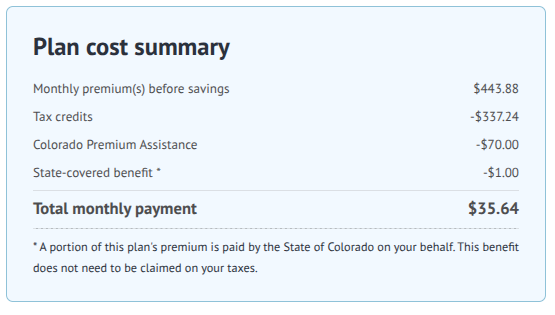
You’re looking over your Connect for Health Colorado enrollment summary and notice a line called “State-covered benefit.” It might say –$1.00 if you’re the only person enrolled, or for example –$3.00 if three people are enrolled. That minus sign is the helpful part. Colorado is paying that piece of your monthly premium directly to your insurance company. The payment covers the portion of your premium set aside for abortion coverage that federal tax credits can’t pay for.
Why it shows up separately
Colorado requires individual health plans sold through its marketplace to cover abortion care. Federal law limits when federal money can pay for abortion services, with exceptions for rape, incest, or when a pregnancy endangers the patient’s life. For coverage outside those exceptions, insurers have to account for that part of the premium separately. Federal rules set the amount at a minimum of $1 per enrolled person per month.
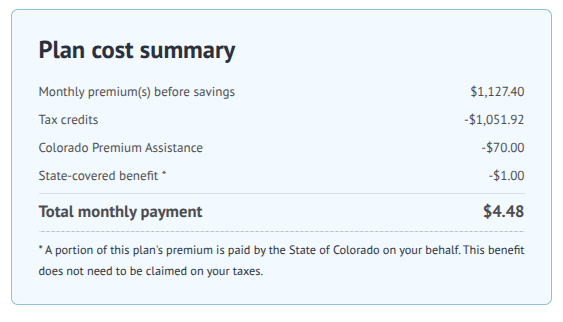
When you see the “State-covered benefit” credit, Colorado’s Health Insurance Affordability Enterprise is picking up that piece of the premium. If the rest of your premium is already covered by financial assistance, that small payment can be the difference between getting a bill for a dollar or two each month and owing $0.
How it fits with your other premium help
You may also see Colorado Premium Assistance on the same summary. That’s income-based help that lowers your monthly premium. The “State-covered benefit” payment has a narrower job. It covers the specific portion of the premium set aside for abortion coverage. So if your summary shows $120 in Colorado Premium Assistance and a $3 state-covered benefit credit, both reduce what you owe, and each has its own line.
If you’re checking what to budget each month, look for the final monthly premium after all the credits. That’s the amount to compare with your insurer’s bill. If those totals differ, send me the two amounts and I can help you figure out where the difference is coming from.